

There needs to be a distinction between Artificial Intelligence (AI) and automation. As applied to the sciences, finance, and business, yes—there is a lot that AI can do. Scientific research, accounting, and process flows are all areas where AI will excel. However, we live in a physical world. Zuckerberg wants us to live in a virtual one, but until there is some kind of singularity, products still have to be moved from point A to point B. Musk is alluding to work being optional in 10 to 20 years, which sounds great, but there is one small problem: box cutters.
As part of my perpetual mid-life crisis, I am doing some seasonal work for a major retailer. The store is large even for its type, essentially hiding a warehouse in and throughout the sales floor to accommodate the receiving and storing of merchandise. I picked this job because decades ago, in 1997, I worked in a warehouse distributing medical equipment to laboratories and universities. At the time, we would get a list of items to pick and package for shipment. The peak of technology was a barcode gun used to match items to locations and track inventory. We schlepped items throughout the warehouse with carts, pallet jacks, and forklifts.
28 years later, not much has changed.
I still use a barcode gun to restock the warehouse. It has internet connectivity now, which is great for helping customers on the sales floor, but functionally? The only difference is that my scanner has Wi-Fi.
That covers the software side. But as for the physical side? Here is why the robots aren’t taking over for a very long time:
- The Power Problem: The amount of energy humans use to manipulate boxes is staggering. We don’t just move them; we flip, lift, cut, unpack, and break them down. This happens hundreds of times a day. Unless Optimus gets a laser cutter (which needs more battery), the energy density required to mimic a human stocker is immense.
- Processing Overload: For a robot to sort through a poorly stacked truck trailer would freeze up a data center. AI would experience “ADHD” trying to identify and sort packages based on weight, size, perishability, and demand.
- Wear and Tear: Human ligaments evolved over thousands of years for fine motor skills. Can servo motors last decades without “electronic carpal tunnel”?
- The Economics of Labor: Companies are addicted to cheap labor. Even at $20.00/hour, humans are cheaper and more scalable than robots. You can ramp human staff up and down for the holidays instantly. Unless “Rent-a-Robot” becomes a reality, fixed capital costs for robots make no sense for fluctuating retail seasons.
- The “Robot Union”: If we do get “Rent-a-Robot,” you risk vendor lock-in. If you have a dispute with the supplier, can they “brick” your workforce like a cell phone with an overdue balance? Your entire distribution center could be held hostage by a software update or contract dispute. Or something like this Waymo mess: https://abc7news.com/post/waymo-driving-cars-standoff-cause-traffic-jam-san-francisco-video-shows/18264976/
The Verdict
The future is likely automation, not robots. We need a renaissance in how products are packaged and distributed—think smart conveyor belts and internal loading systems, not humanoid robots walking down aisles.
But so far, aside from Amazon distribution centers, I don’t see the robotics wave dropping into the real world any time soon.
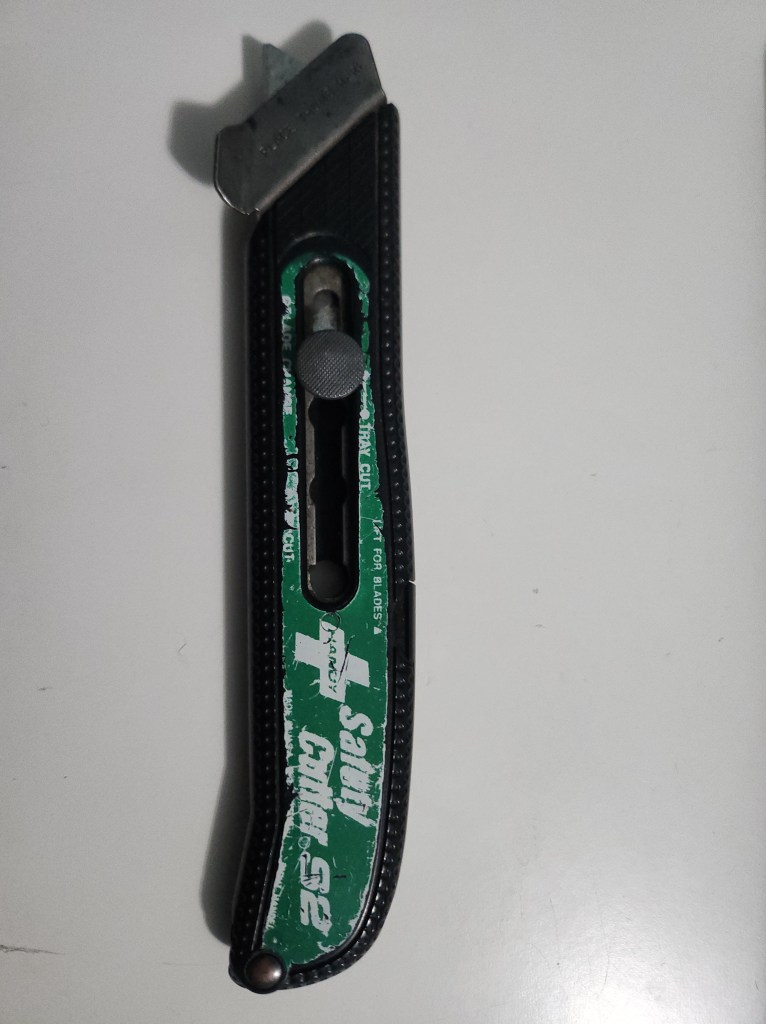
- 1. This is my box cutter. There are many like it, but this one is mine.
- 2. My box cutter is my best friend. It is my life. I must master it as I must master my life.
- 3. My box cutter, without me, is useless. Without my box cutter, I am useless.
 Voltage Valley